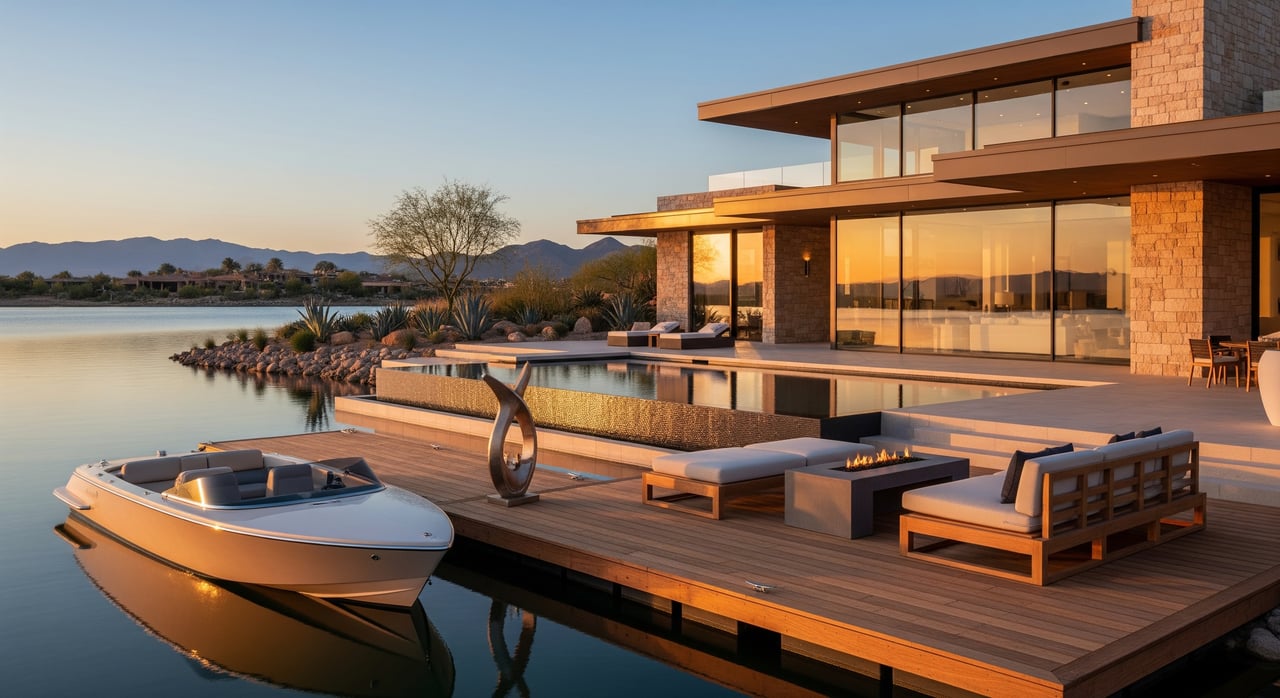
Picture yourself sipping coffee as the sun comes up over still desert water. If you have been searching for “Lake Arrowhead” from Las Vegas, you are likely thinking about the lakefront lifestyle closer to home. In our market that often means Lake Las Vegas, communities with private amenity lakes, and access to Lake Mead. You want clarity on what daily life feels like, what rules apply, and the true costs that come with the view. This guide gives you a clear, local look at waterfront living near Las Vegas so you can decide with confidence. Let’s dive in.
What “waterfront” means in Las Vegas
Waterfront in the Las Vegas area falls into three common categories. Each comes with its own rules, access, and lifestyle.
Public reservoirs like Lake Mead
On Lake Mead, you enjoy wide-open water, public marinas, and long-distance boating. Activity peaks on spring and summer weekends, especially around holidays. Rules are set by federal and state agencies, which cover boat registration, safety gear, and where you can operate. If you want full-power boating and a big-lake feel, this is where you find it.
Private amenity lakes and master plans
Communities built around private lakes offer a curated, calmer experience. You typically see electric boats, kayaks, paddleboards, and designated swim areas for residents and guests. An HOA governs access, boat types, quiet hours, and events. These communities provide a resort-like feel with on-site marinas or storage, but you live by the rules that keep it that way.
Decorative ponds and golf-course water
Some neighborhoods feature smaller ponds or canal-like water features. They deliver a water view without full boating access. Maintenance responsibilities and use rules vary by HOA. If you want the visual benefit with fewer moving parts, this setup can be appealing.
Daily life on the water
Waterfront living is as much about rhythms as it is about views. Knowing what to expect helps you choose the right fit.
Recreation and boat culture
Public lakes lean activity heavy, with motorboats, jet skis, and fishing. Expect busy ramps and festive weekends. Private-lake boating tends to be quieter and more social, with small craft and community programming. Before you buy, confirm what boats are allowed and how guest access works.
Views and the desert light
Desert light creates dramatic sunrises and sunsets that reflect off the water. Broad reservoir views feel expansive. Narrow canals and ponds provide an intimate frame. Water color and clarity change with wind, algae, and season, so expect some variation week to week.
Noise and activity levels
Public access areas surge on peak weekends. Private lakes usually enforce quiet hours and limit wake or engine noise. In metro neighborhoods, you will also notice normal city sounds like distant roads or occasional aircraft. Early mornings and late evenings are typically the calmest times.
Wildlife and pests
You will see waterfowl and the occasional raptor. Mosquitoes and other insects can appear when water is still. Good circulation, stocking, and vector control reduce issues. Algae blooms can occur seasonally and may lead to posted advisories on public waters, while private lakes use monitoring plans to manage conditions.
Community and privacy
Waterfront neighborhoods attract a mix of full-time residents and second-home owners. Social life might revolve around the marina, HOA gatherings, or club events. Privacy depends on lot design, setbacks, and whether shore paths are shared. Tour at different times of day to gauge the feel.
Climate and seasonality
The desert changes how a lake lives and how you live beside it.
Heat, monsoon, and wind
Summers are very hot, with many days at 100 degrees or more. Most residents plan water time early or late in the day and use shade and sun protection. From July to September, monsoon storms can bring sudden wind, dust, and lightning. Winters are mild, which supports year-round lake access even if activity slows.
Water levels and shoreline change
High evaporation and regional water management can lower lake levels. On private lakes, management plans guide how levels are maintained. On public reservoirs, lake levels follow broader policy and weather patterns. Lower water can affect launching, dock usability, and views, so ask about recent history and adjustment practices.
Water quality and advisories
After heavy rain, runoff can add silt and reduce clarity for a short time. Warmer seasons can bring algae blooms that change water color and smell. Public agencies post advisories when needed, and private communities often test and share results. It is smart to understand how monitoring works where you plan to live.
Landscaping and fire considerations
Foothill and mountain-edge areas require attention to defensible space and local fire codes. Even in lower elevations, follow community guidelines for safe landscaping. Choose plantings and materials that balance beauty and resilience.
Ownership and ongoing costs
Waterfront ownership has unique logistics. Clarity upfront protects your time and budget.
Property types and access rights
You will see several property setups. Some homes sit directly on the shore with dock rights. Others have deeded slips at a community marina. Lake-view homes set back from the water trade direct access for lower maintenance. Always confirm whether shoreline and docks are owned by the HOA or by individual owners.
HOA rules and permits
On private lakes, the HOA sets boat size limits, acceptable engines, guest rules, and quiet hours. Short-term rental policies can be strict or prohibitive. For any dock or shoreline structure, confirm permits, who maintains them, and renewal timelines. On public waters, permanent structures require state or federal approvals.
Insurance and maintenance
Water proximity can raise insurance costs, especially if docks or slips add liability. Flood insurance depends on FEMA mapping for the parcel, not the presence of water alone. Expect line items for dock repair, shoreline stabilization, exterior wear from sun and wind, pest control, and irrigation management.
HOA fees and special assessments
Shoreline upkeep, water treatment, marinas, beaches, and security are often funded by HOA fees. Review budgets, reserves, and any recent or upcoming assessments tied to water management. Solid reserves point to stable operations.
Market and resale insights
Waterfront typically commands a premium over similar inland homes. Quality of view, access rights, and privacy drive pricing. The buyer pool is more focused, which can be helpful when the right listing hits the market. Second-home appeal is strong in the Las Vegas area, and policies on short-term rentals can shape income potential. Check community rules first if rental flexibility matters to you.
Safety, rules, and services
Safety is a mix of personal responsibility and clear governance.
Boating safety and enforcement
On public waters, state and federal regulations apply to registration, life jackets, and operation. Private lakes rely on HOA rules, and local boating laws may still apply. Know who patrols the area, whether that is park rangers, county units, or community security.
Emergency response and access
Response times vary with distance from urban services and gate procedures. Confirm routes, gate protocols for first responders, and proximity to hospitals and urgent care. If you plan to host guests, share access plans and safety guidelines.
Health notices and vector control
Stay aware of advisories about algae or bacteria on public reservoirs. Ask private communities about their testing schedule and how they handle mosquito abatement. Good communication is a sign of good management.
Due diligence checklist for buyers
Use this list to move from dream to decision.
- Confirm the legal name of the lake and who manages it, public agency or HOA.
- Verify whether the property includes a deeded dock or boat slip, or access only.
- Review HOA rules for boat size and type, noise, guest access, parking, and rentals.
- Ask for water-level history, including any periods with exposed shoreline or unusable docks.
- Request recent water-quality test summaries and any posted advisories.
- Review HOA financials, reserves, and recent meeting minutes related to lake maintenance.
- Get insurance quotes that reflect dock liability and any flood-zone requirements.
- Price common maintenance tasks like dock repair, shoreline work, pest control, and exterior care.
- Assess privacy factors, public access points, and how busy weekends feel.
- If it is a second home, vet local property managers and short-term rental rules.
Is waterfront living right for you?
If you love time on the water and the glow of desert sunsets, the lifestyle can be remarkable. The key is fit. Public reservoirs deliver scale and energy. Private-lake communities offer calm, amenities, and structure. With clear rules, known costs, and a strong HOA or management team, you gain the benefits while keeping surprises in check.
When you are ready to explore specific homes, covenants, and dock rights, work with a team that knows the details and the documents. For discreet guidance and a clear plan tailored to your goals, connect with The Napoli Group.
FAQs
What does “waterfront” mean near Las Vegas?
- It usually refers to homes on or near Lake Mead, private amenity lakes inside master-planned communities, or properties with views of ponds and canals in golf or resort neighborhoods.
How different are public lakes and private lakes for daily life?
- Public reservoirs are larger and busier with full-power boating, while private lakes are HOA-managed with calmer activities, stricter rules, and resident-focused access.
What rules affect boats and docks in private-lake communities?
- HOA documents set boat types, horsepower or engine limits, dock standards, quiet hours, guest access, and short-term rental policies, so review them before you buy.
Do water levels change on Las Vegas–area lakes?
- Yes, evaporation and regional water management can lower levels, which may affect shoreline access, launching, and dock usability, so ask for recent level history.
Will I need flood insurance for a waterfront home?
- Flood insurance depends on FEMA flood zone maps for the specific parcel, not simply being near water, so confirm with your lender and insurer.
What ongoing costs should I expect for a dock or shoreline?
- Budget for dock maintenance or replacement, shoreline stabilization, pest control, added exterior wear from sun and wind, and HOA fees that fund lake operations.